Getting Your Team Ready for a Move Abroad
Relocating a team abroad? Here's what 'ready' means in English — and a typical intensive pattern of one-on-one lessons so people can speak with confidence in about six to seven weeks.
When a company decides to move people abroad — or to stand up a team that will live and work in English overnight — language becomes a project risk, not a nice-to-have.
Short answer: the teams that arrive ready are the teams that practised real work English intensively before the move: meetings, clients, emails, everyday life after landing — with frequent one-on-one speaking time, not a last-minute phrasebook.
What "ready" actually means
Ready is not a certificate on paper. Ready looks like this:
- An engineer can give a clear Zoom update to a US or global manager
- A team lead can disagree politely without freezing
- Someone can handle housing, school or banking conversations after landing
- Emails sound human, and the same person can say the message out loud
If your people can only pass a written test, the first week abroad will be harder than it needs to be.
A typical intensive pattern (no client names)
When companies come to me for relocation or international expansion, a pattern that works well looks like this:
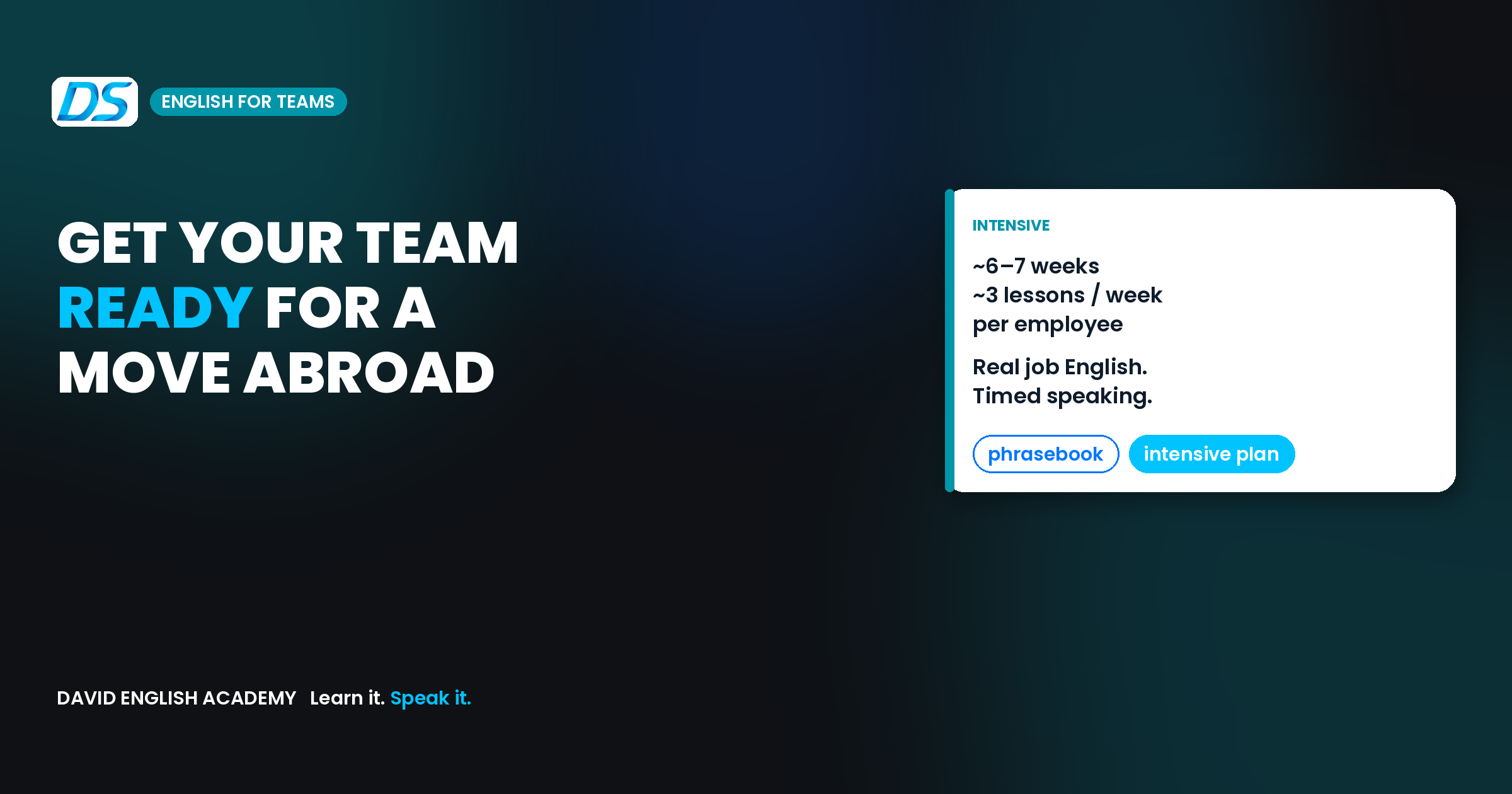
- About six to seven weeks of focused training before the move (timeline varies by starting level and role)
- About three one-on-one lessons a week per employee
- Content built from their real jobs: product updates, client calls, incident reports, hiring interviews
- Extra blocks for life-after-landing English when people are moving with families
- Regular short timed speaking turns so progress is audible to managers
This is a typical example of an intensive team program — not a promise that every company needs the same schedule. Some teams need longer. Some roles need more writing. The principle stays: frequent speaking + real situations + feedback.
What we practise (so the move doesn't shock the team)
Work English
- Standups and status language: on track / at risk / blocked
- Client explanations without over-apologising
- Presenting a trade-off clearly
- Small talk that isn't painful
Professional writing that matches speaking
- Short updates
- Clear asks
- Subject lines that don't hide the point
Life English (when relocating)
- Appointments, school, deliveries, neighbours
- Asking for clarification without embarrassment
- Surviving the first month without defaulting to silence
What managers should provide (besides budget)
Training fails when the company only buys hours. Help the trainer (and the team) by sharing:
- Role profiles and who is client-facing
- Real anonymised emails and meeting agendas
- The move date and the first-month success criteria
- Timezone constraints for lessons
- Who owns measurement on the company side
Intensive programs work best as a partnership, not as a black box.
How I teach relocation teams
Speak from day one. Choose the word that fits the real situation, then the form and structure — no robotic transformations. I correct, coach and build, lesson by lesson. Short timed speaking turns (the JAM method) recreate the pressure of a new office abroad before anyone boards a plane.
Born and raised in New York, I've been teaching English since 2011. I teach online worldwide, including corporate intensive programs for teams preparing for international work.
Mini exercise for managers: List eight English situations your relocating employees will face in week one (four at work, four in life). That list becomes the curriculum outline.
Your turn: If your team had six weeks, which three speaking situations would you prioritise first — and why?
Frequently asked questions
How early should we start before a move?
As early as you can staff it. Six to seven weeks of intensive one-on-one practice is a useful planning target for many teams; lower starting levels need more runway.
Group class or one-on-one?
For relocation speed, frequent one-on-one lessons per employee usually move the needle faster. Light group sessions can still help for shared company phrases.
Can AI translation replace this preparation?
Tools help in a pinch. They don't build the confidence to lead a meeting in a new country or handle a landlord call when the Wi-Fi is down. Train the humans.
Read next
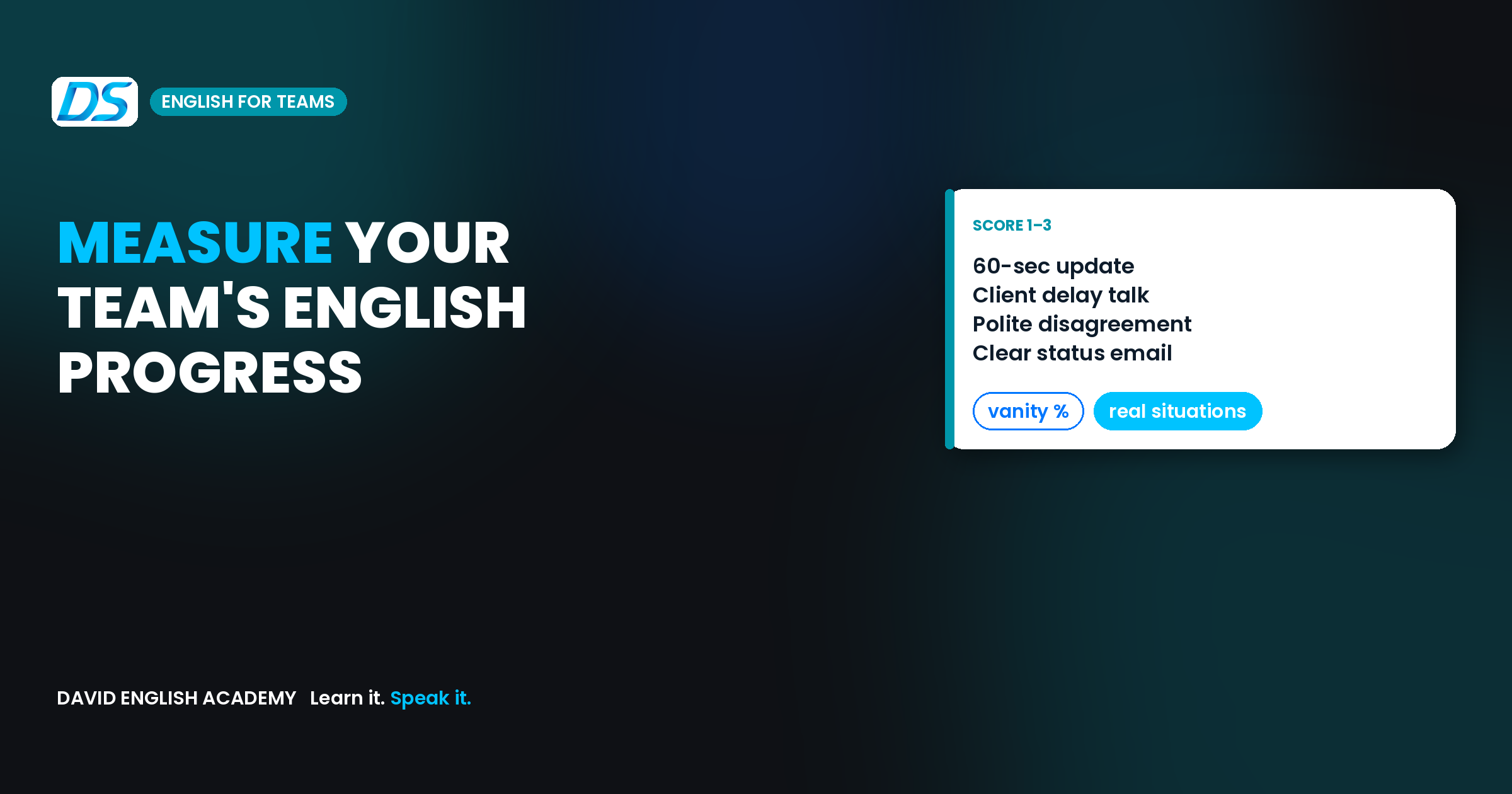
- How to Measure Your Team's English Progress (Without Fake Stats)
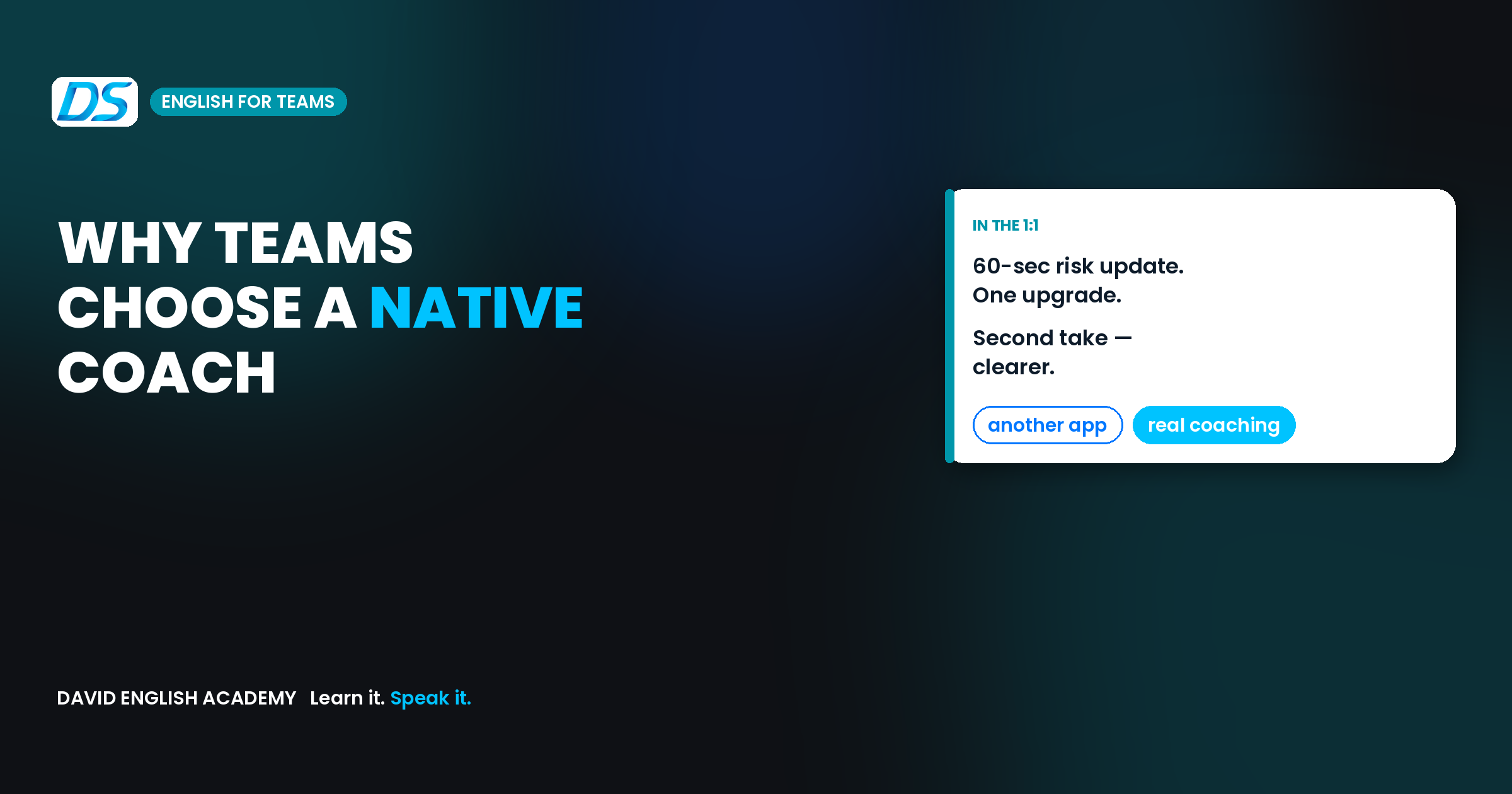
- Why Teams Choose a Native Business English Coach
I'm David Sugarman, founder of David English Academy. Born and raised in New York, I've been teaching English since 2011, and today I teach professionals and teams online around the world. Learn it. Speak it. Read more about me, visit the homepage, or talk to David about training your team.