I understand what people say but still can't speak English
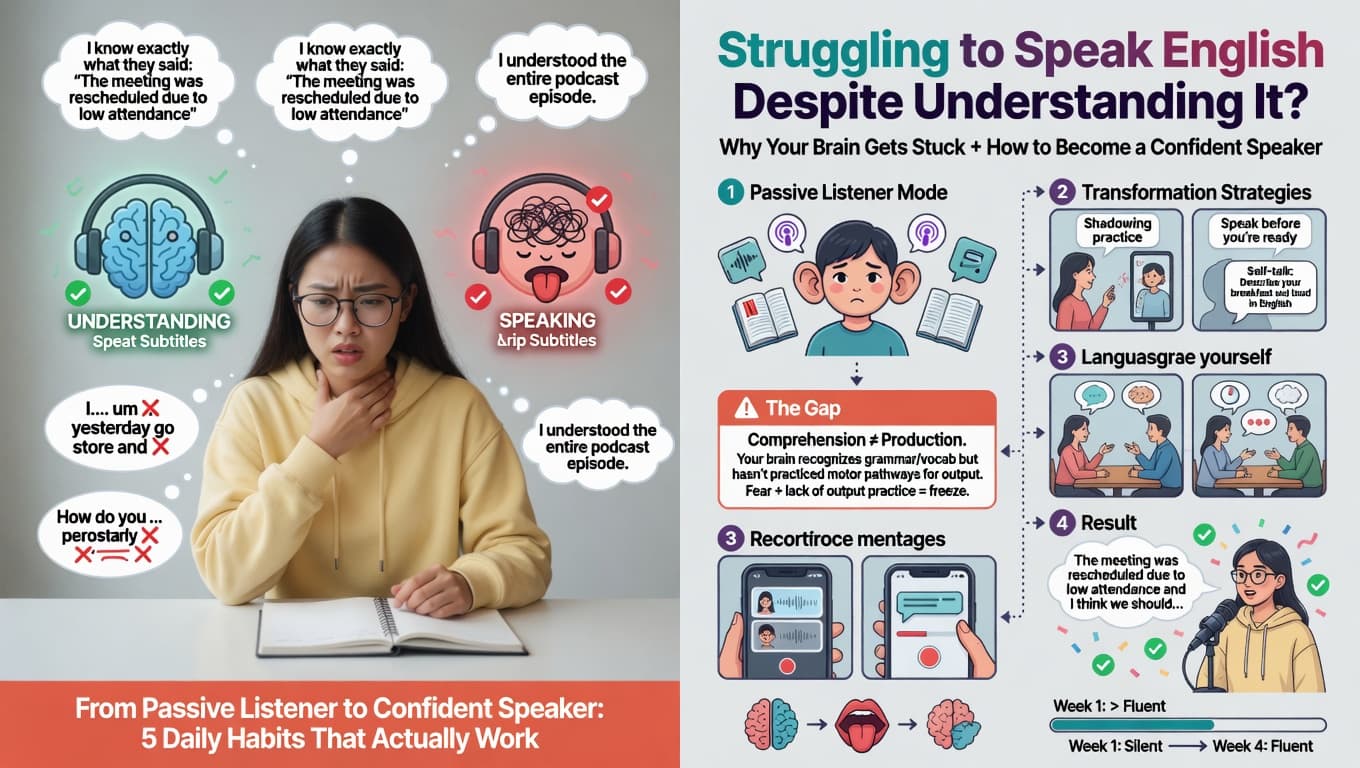
Struggling to speak English despite understanding it? Discover why and learn effective strategies to transform from a passive listener to a confident speaker.
Understanding the Phenomenon: Passive Comprehension vs. Active Speaking
Many English learners find themselves in a paradox: they excel at understanding spoken English but struggle to express their thoughts verbally. This phenomenon can be frustrating, but recognizing its underlying causes can help you break free from the shackles of passive comprehension.
The Listening Paradox
The brain processes listening and speaking differently. When you listen, you’re primarily engaged in reactive learning, where you absorb information. Speaking, however, requires active production of language, which can be intimidating.
-
Listening involves:
- Recognizing words and phrases.
- Understanding grammar and context.
- Interpreting tone and body language.
-
Speaking involves:
- Creating sentences on the fly.
- Managing pronunciation and grammar under pressure.
- Finding the right vocabulary quickly.
It's important to note that many learners get stuck in the comfort zone of listening, making it challenging to transition into speaking.
Reasons Behind Your Difficulty in Speaking English
Understanding why you can comprehend but can't speak is essential for improvement.
1. Lack of Practice
One of the primary reasons for hesitance in speaking is the lack of opportunities for practice. Speaking requires muscle memory and habit formation, which can only develop through regular use.
2. Fear of Making Mistakes
Fear can be paralyzing. Many learners hesitate to speak due to worries about pronunciation, grammar, or vocabulary. This fear creates a mental block that hampers progress.
3. Overthinking Language Structure
When speaking, some learners focus too much on grammar and vocabulary rather than conveying their message. This perfectionism can lead to hesitancy or avoidance of speaking altogether.
4. Vocabulary Limitations
If your vocabulary is limited, you may struggle to find the words needed to express your thoughts. This can lead to frustration and withdrawal from speaking situations.
Effective Strategies to Overcome Speaking Barriers
While the challenges may seem daunting, the good news is that there are effective strategies to help you boost your speaking skills.
1. Engage in Conversation Practice
The best way to improve your spoken English is through practice. Here are some actionable ways to engage:
-
Language Exchange: Partner with a native English speaker who wants to learn your language. This creates a comfortable environment for both parties.
-
Join English Conversation Classes: Many platforms offer interactive sessions where you can speak with others at your level or above.
-
Use Online Platforms: Websites like Tandem and HelloTalk connect you with individuals who can help you practice English in real-time.
2. Embrace Mistakes as Learning Opportunities
"Mistakes are proof that you are trying." - Jennifer Lim
Shift your mindset to view mistakes as essential parts of the learning process. Embrace errors as opportunities to improve.
-
Reflect on Errors: After a conversation, jot down any mistakes you made or words you found challenging.
-
Ask for Feedback: If you're comfortable, ask conversation partners to point out areas for improvement in a supportive manner.
3. Expand Your Vocabulary Incrementally
A broad vocabulary enables greater expression. Here are some tips for vocabulary enhancement:
-
Set Weekly Goals: Aim to learn 5-10 new words each week that are relevant to your interests or daily life.
-
Use Flashcards: Tools like Anki or Quizlet are excellent for memorization. Include example sentences to contextualize your learning.
-
Read Aloud: Reading books or articles aloud not only improves pronunciation but also helps in retaining vocabulary.
4. Create a Comfortable Speaking Environment
Feeling relaxed can significantly impact your ability to speak. Here are practical tips:
-
Practice Alone: Use methods like shadowing, where you mimic a speaker’s pronunciation and intonation. This builds confidence.
-
Role-Playing: Practice scenarios relevant to your life, such as ordering food or discussing a hobby. This reduces anxiety for real-world situations.
-
Set Realistic Goals: Start with short exchanges before progressing to longer conversations. Celebrate small victories to maintain motivation.
Incorporating Daily Practice into Your Routine
Integrating speaking practice into your daily routine doesn’t have to be overwhelming. Here’s how you can modify your schedule:
-
Morning Routine: Spend 5-10 minutes speaking in front of a mirror. This can involve summarizing yesterday’s events or discussing your plans for the day.
-
Daily Commute: Use this time to listen to podcasts or audiobooks and then discuss what you learned with a partner, either verbally or in a journal.
-
Evening Review: Dedicate time at night to recount your day in English, focusing on vocabulary and structures you want to improve.
Conclusion: Empowering Your Speaking Journey
While it can be disheartening to understand English but struggle to speak it fluently, rest assured, your journey is both common and surmountable. By practicing consistently, embracing mistakes, expanding your vocabulary, and creating supportive environments, you will gradually transform from a passive listener to a confident speaker.
Remember that learning a new language is a journey, not a race. Celebrate your progress, no matter how small, and keep pushing your boundaries. Your communication skills will flourish, and soon you'll find yourself engaged in meaningful conversations in English.
Keep practicing and remain motivated! With time and effort, you will undoubtedly succeed in overcoming this challenge.