Business Vocabulary work in electrical engineering
Unlock your potential in electrical engineering by mastering essential business vocabulary. Enhance your communication skills and boost your professional success today!
Introduction
In the rapidly evolving field of electrical engineering, proficiency in business vocabulary is crucial for effective communication and professional success. Whether you're collaborating on a project, drafting reports, or engaging in meetings, knowing the right terms can elevate your interactions. This blog post will explore essential business vocabulary relevant to electrical engineering, providing practical insights and tips to enhance your professional language skills.
Why Business Vocabulary Matters in Electrical Engineering
Electrical engineering is not just a technical field; it's also deeply intertwined with business practices. Understanding business vocabulary enables engineers to:
- Communicate effectively with non-technical stakeholders.
- Present ideas clearly to funding bodies or in business negotiations.
- Convey technical information in accessible language.
“It’s not the strongest species that survive, nor the most intelligent, but the one most responsive to change.” – Charles Darwin
This quote underscores the importance of adapting to new environments, including mastering the vocabulary required for effective communication in the business world.
Key Business Vocabulary for Electrical Engineers
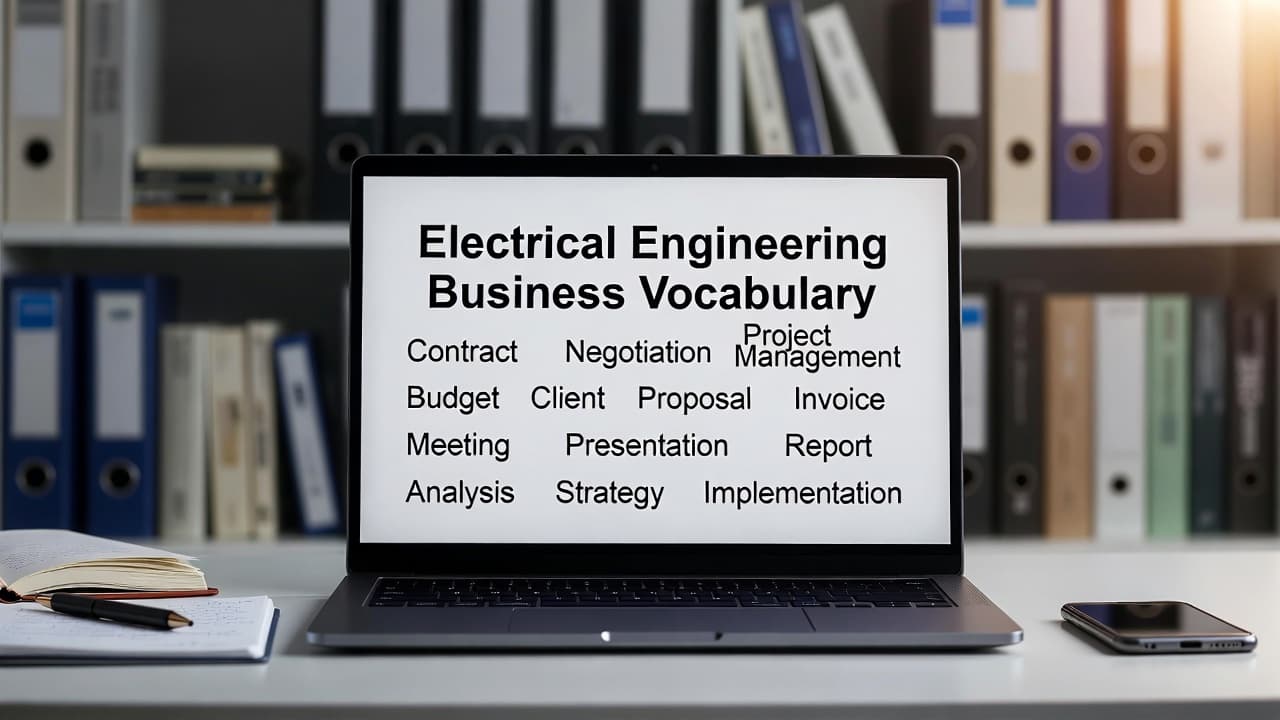
Mastering specific terms can greatly enhance your confidence in business settings. Below are several essential categories and terms:
1. Project Management Terms
Project management is crucial for timely and cost-effective project execution. Here are some key terms:
- Scope: The boundaries of what a project will and won't include.
- Milestone: A significant point in a project timeline, often marking the completion of a phase.
- Deliverable: A tangible or intangible product produced as part of a project.
Practical Tips
- Use project management software like Trello or Asana to help familiarize yourself with project management terminology.
- Practice writing project scopes and identifying milestones on sample projects.
2. Financial Vocabulary
Understanding the financial aspects of projects is essential for success. Key terms include:
- Budget: An estimate of the costs associated with a project.
- ROI (Return on Investment): A measure of the profitability of an investment.
- Capital Expenditure: Funds used by a company to acquire or upgrade physical assets.
Practical Tips
- Engage with financial documents or reports to see how these terms are used in context.
- Consider online courses that focus on business finance for engineers.
3. Networking and Communication Skills
Effective networking involves not just knowing people but also mastering professional language. Here's a list of important terms:
- Networking: Building relationships with professionals for collaboration and knowledge sharing.
- Elevator Pitch: A brief, compelling summary of who you are and what you do.
- Stakeholder: Any individual or group that has an interest in the outcome of a project.
Practical Tips
- Develop your elevator pitch by summarizing your work and goals in 30 seconds or less.
- Practice networking at industry events or through online platforms like LinkedIn.
4. Engineering-Specific Vocabulary
In addition to general business vocabulary, engineers should familiarize themselves with specific technical terms often discussed in business contexts:
- Prototyping: The process of creating early models of a product to test and validate ideas.
- Compliance: Adhering to norms, standards, and regulations relevant to engineering projects.
- Innovation: The introduction of new ideas, products, or workflows to improve efficiency or effectiveness.
Practical Tips
- Attend workshops or webinars that focus on the latest innovations in electrical engineering.
- Collaborate with peers to brainstorm prototype designs and compliance strategies.
Building Your Vocabulary Skills
Improving your vocabulary is an ongoing process. Here are some effective methods:
1. Reading Industry Literature
Stay updated by reading:
- Technical journals: Understanding the latest research and trends.
- Business reports and white papers: Gaining insights into industry challenges.
- LinkedIn articles: Engaging with real-world discussions and opinions.
2. Engaging in Conversations
Participate in:
- Networking events: These provide opportunities to practice your vocabulary in real-time.
- Online forums: Platforms like Reddit or specialized engineering forums can be invaluable for informal learning.
- Group discussions: Join study or project groups to engage and practice new vocabulary.
3. Using Language Learning Apps
Many apps specialize in business vocabulary. Some popular options include:
- Duolingo: Offers tailored lessons for vocabulary expansion.
- Babbel: Focuses on conversational skills relevant to business contexts.
- Memrise: Uses spaced repetition for effective learning.
Effective Practice Strategies
To reinforce your learning, consider these strategies:
- Flashcards: Create flashcards for new vocabulary terms and review them regularly.
- Group Activities: Engage in group exercises that require using new vocabulary in context.
- Record Yourself: Speaking aloud or recording yourself can enhance both your pronunciation and comfort level with vocabulary.
Conclusion
Mastering business vocabulary in electrical engineering is not merely about memorizing words; it's about integrating these terms into your professional communication. By understanding essential terms in project management, finance, networking, and engineering-specific contexts, you can improve your effectiveness and confidence in various professional settings.
Start by incorporating these terms into your daily routines, engage actively with your peers, and keep seeking opportunities for real-world practice. With dedication, you will find that a rich vocabulary opens doors to new opportunities in your engineering career.
To further aid in your journey, continually seek resources, workshops, and communities dedicated to English language learning and professional development. Happy learning!