Why Learn American English for Business?
American or British English for your career? Here's when American English is the practical choice for meetings, tech and US clients — without fake global stats.
People ask me: "Does it matter if I learn American English or British English?"
Short answer for most of my students: if your clients, product docs, investors or interviewers lean American — or if you work in global tech — American English is usually the more useful default. Not because it's "better." Because it's what you'll hear in the rooms you're trying to enter.
Why American English helps at work (without the fake global stats)
You'll see articles claiming huge numbers of English speakers worldwide. I don't need a giant number to make the practical point:
- A lot of international business, tech and media defaults to American spelling, vocabulary and meeting culture
- Hollywood, US podcasts and US product UIs quietly train your ear whether you planned it or not
- If you interview with a US company, or support US customers, matching their expectations reduces friction
British English is equally "real." If your career is UK-centred, lean British. The goal isn't purity. The goal is fit.
What you actually gain
1. Fewer awkward mismatches in writing
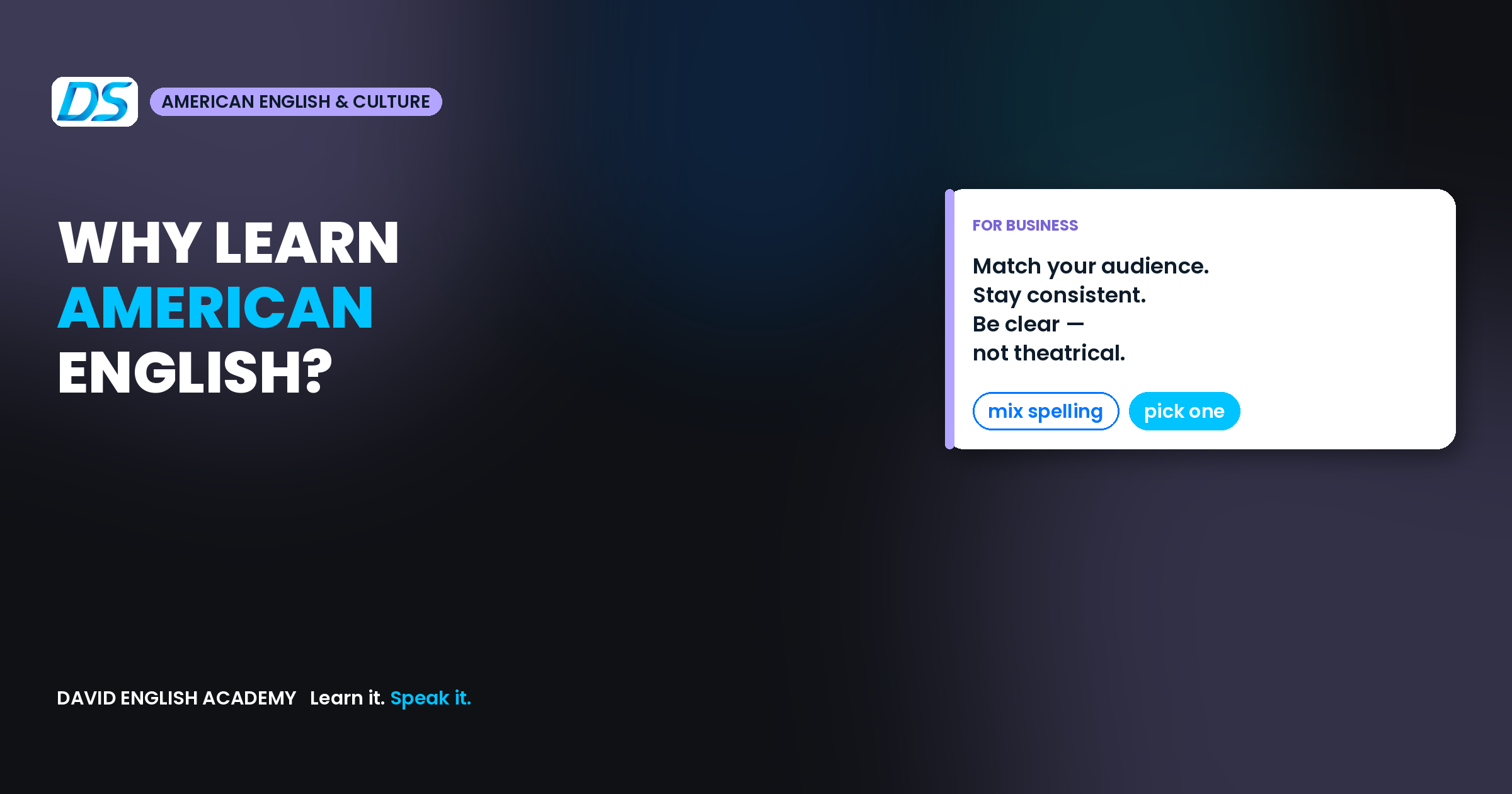
Color / colour, organize / organise, defense / defence. Pick one variety for a document and stay consistent. Mixing both in one proposal looks careless, even when your ideas are strong.
2. Vocabulary that matches the meeting
Elevator vs lift, apartment vs flat, schedule (American "sked-jool") — small differences, big moments of hesitation.
3. Meeting culture cues
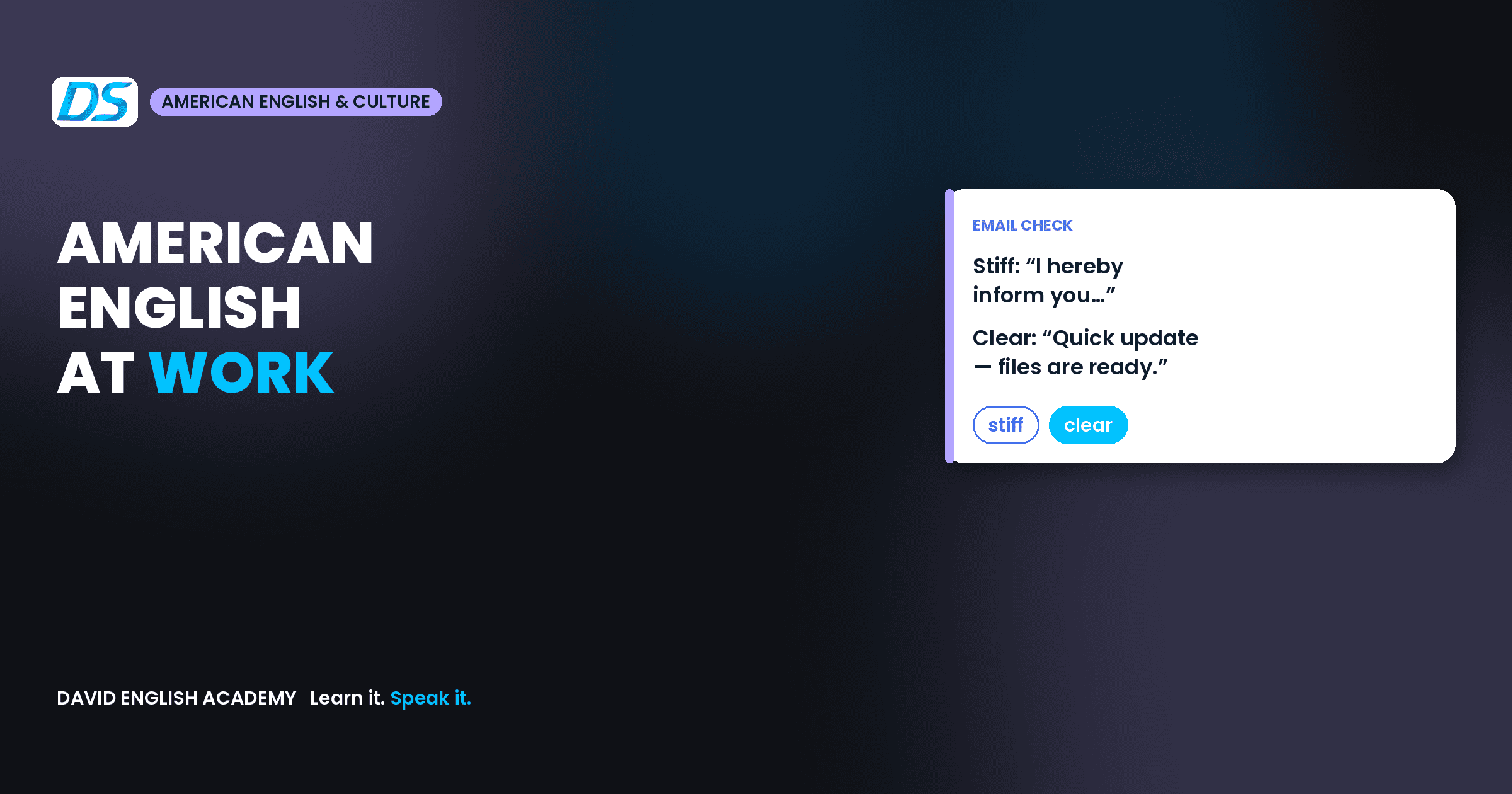
American business English often likes a clear opener, a short update, and a direct ask. Softening still matters ("I might be missing something, but…"), yet endless circling can read as unprepared.
4. Confidence with the accent you already have
You do not need to sound like a news anchor. You need to be clear. Stress, pace and structure matter more than erasing where you're from. (For a deeper take on accent and being heard at work, Harvard Business Review's March 2026 piece on the "accent penalty" is worth reading — clarity and engagement matter more than chasing a fake native voice: HBR, 17 Mar 2026.)
American vs British: a quick work table
| Situation | American-leaning choice | British-leaning choice |
|---|---|---|
| Spelling in a US pitch deck | organize, center, favor | organise, centre, favour |
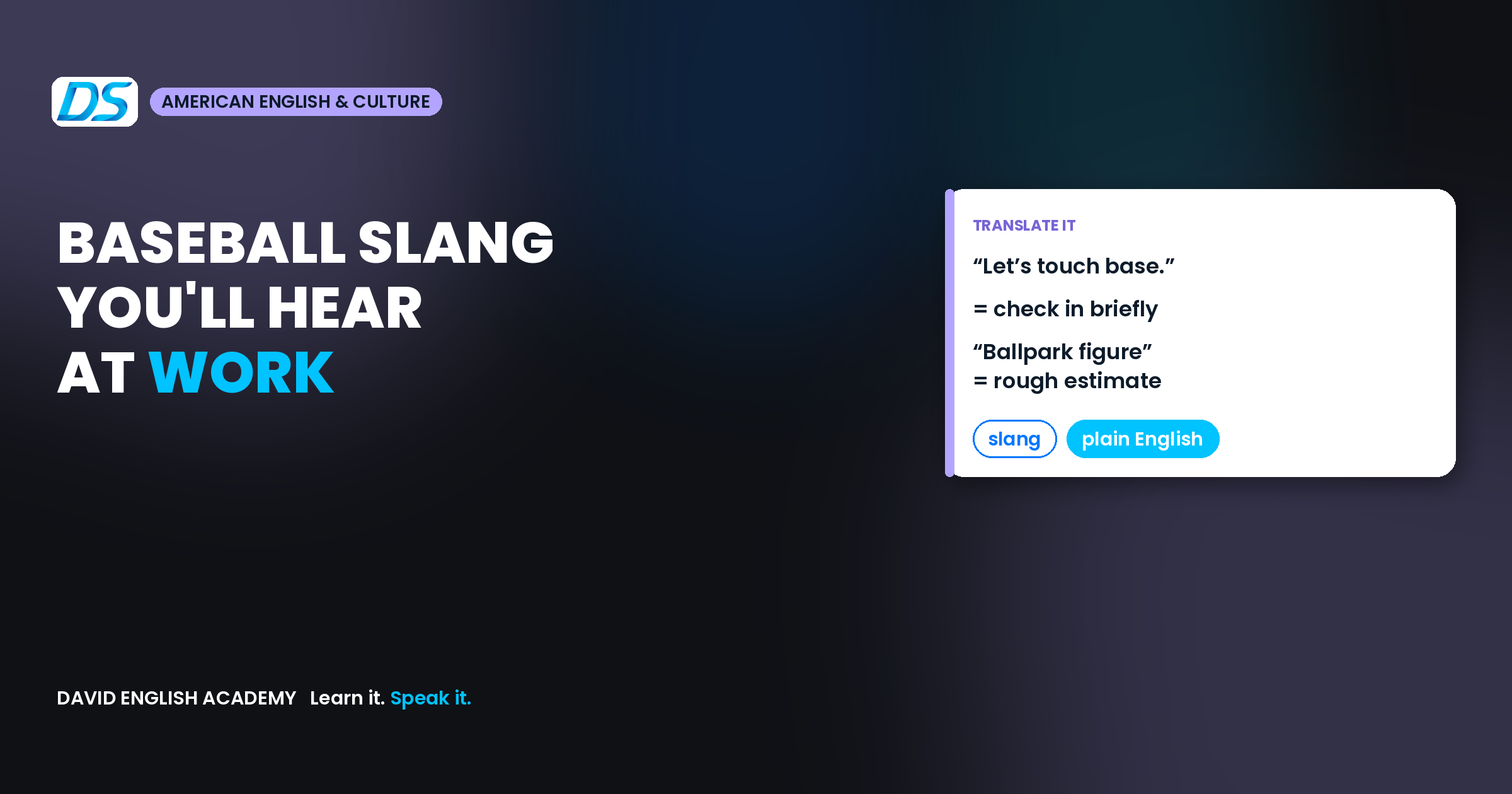
| Asking for a rough number | ballpark figure | rough estimate |
| Checking in | touch base / sync | catch up |
| Email sign-off (neutral) | Best, / Thanks, | Kind regards, / Best regards, |
What I tell students who feel stuck between varieties
If your company already writes in British English, don't create chaos by switching overnight. If you're joining a US team next month, start aligning now: spelling in docs, meeting phrases, and listening to American speakers for rhythm.
A practical bridge week:
- Pick five emails and normalise spelling (American or British — match the audience).
- Practise one 60-second update with American meeting openers.
- Watch one short US workplace clip and shadow two sentences.
Small alignment beats a theoretical debate about which English is "correct."
How I teach American English for careers
I was born and raised in New York. I don't teach slang for its own sake. I teach the English of your job: meetings, Zoom, email, interviews. You speak from day one. You choose the word that fits the real situation, then the form — no robotic transformations. I correct, coach and build. Short timed speaking turns (the JAM method) put American workplace phrases under a little pressure so they show up when a client is listening.
Mini exercise (60 seconds): Set a timer. Pitch your current project in American business English: what it is, who's it for, what's the next milestone. Use schedule, align, and one clear ask.
Your turn: Open your last English email. Is the spelling consistently American or British? Fix three words, then read the email out loud.
Frequently asked questions
Should I switch from British to American English?
Only if your audience makes American the better fit. Consistency matters more than switching mid-year for no reason.
Will an American teacher make me lose my accent?
No — and you shouldn't aim to "lose" it. We aim for clarity: word stress, pace, and structures people understand first time.
Is American English required for tech jobs?
Not as a rule. But US companies and global tech documentation often use American norms, so being comfortable with them helps.
Read next
- American English at Work: What Professionals Actually Need
- American Baseball Slang You'll Actually Hear at Work
I'm David Sugarman, founder of David English Academy. Born and raised in New York, I've been teaching English since 2011, and today I teach professionals online around the world. Learn it. Speak it. Read more about me, or visit the homepage to explore the courses.