American English at Work: What Professionals Actually Need
Skip the history lecture. Here's the American English professionals need for spelling, vocabulary, meetings and emails — from a New York teacher.
"American English" isn't a museum of slang. For professionals, it's a practical toolkit: spelling, vocabulary, and the way people run meetings and write emails when the default is US English.
I'm David Sugarman — born and raised in New York, teaching English since 2011. Here's the American English I actually teach busy adults: the parts that change how you're understood at work.
What professionals actually need (not a history lesson)
Skip the long colonial history for now. You need four things:
- Consistent spelling in docs and decks
- Vocabulary that matches US clients and product UI
- Phrases for meetings (updates, disagreement, asks)
- Clarity of speech — stress and pace, not a fake accent
Vocabulary that trips people up
| American | British / other | Work note |
|---|---|---|
| elevator | lift | Building / office talk |
| truck | lorry | Logistics |
| apartment | flat | Relocation, housing benefits |
| resume (résumé) | CV | Hiring (US roles often say resume) |
| checkbox | tick box | Product / UI copy |
| soccer | football | Small talk minefield |
| pants | trousers | Travel / shopping (avoid comedy) |
You don't memorise 500 rows. You learn the ones in your week.
Grammar isn't the big gap — usage is
American and British grammar overlap hugely. The friction is usually:
- Prepositions: on the weekend (US) vs at the weekend (UK)
- Collective nouns: the team is (more common US) vs the team are (common UK)
- Past forms: gotten (US) vs got (UK) in some perfects
None of these will destroy a meeting. Mixing them wildly in one email can look messy.
Meeting English that sounds American-professional
Try these instead of translating word-for-word from your first language:
- Open: "I'll keep this to five minutes."
- Update: "We're on track for Thursday. One risk: the vendor delay."
- Disagree softly: "I see it differently — here's why."
- Ask: "Can we align on the owner before we leave?"
- Close: "I'll send notes and next steps by end of day."
Email tone: American-professional, not robotic
Compare:
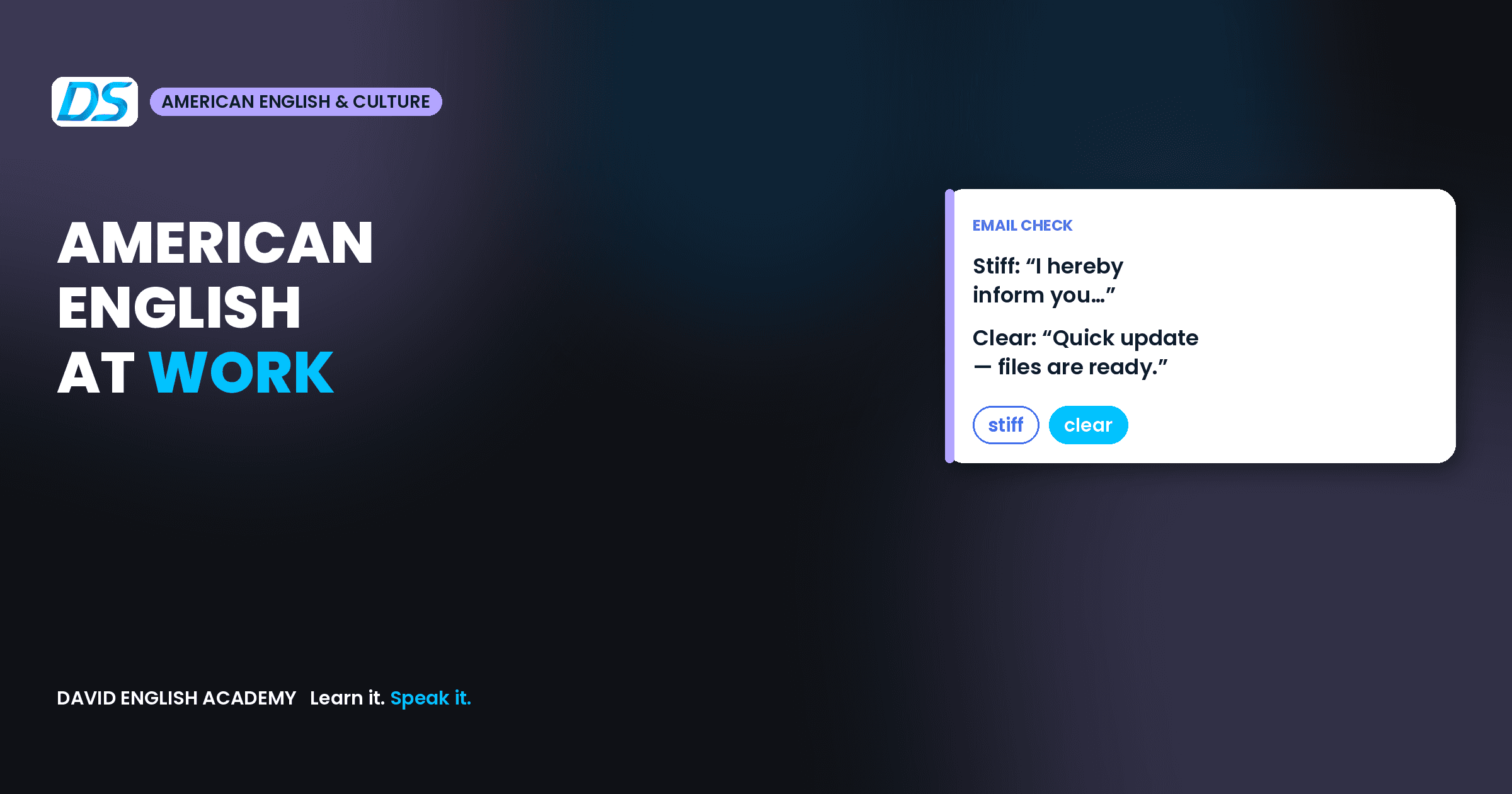
- Too stiff: "I am writing to hereby inform you that the documents have been completed."
- Clear: "Quick update — the documents are ready. I can send the folder now if that helps."
American business email often rewards short paragraphs, a clear ask, and a human tone. AI can draft the stiff version. Your job is to sound like a person who knows the work.
Pronunciation priorities (clarity first)
If we only have limited lesson time, I don't start with erasing your accent. I start with:
- Word stress on key business words (develOPment, comPAtible, scheDULE in American pronunciation)
- Ending sounds that carry meaning (finished vs finish)
- Pace — slightly slower and clearer beats fast and muddy
People understand you when the important words land. That's American-professional English in practice: clear, not theatrical.
How I teach American English
We practise the English of your real job — Zoom, email, interviews — not textbook tourism dialogues. You speak from day one. You choose the word that fits the situation, then the form and structure. I correct, coach and build. Short timed speaking turns (the JAM method) train you to sound clear under a clock.
Mini exercise: Choose the better line for a US client email.
A: "I write you in order to inform that the files are ready." B: "Quick update — the files are ready. Want me to share the folder?"
Answer: B. Shorter, natural, clear ask.
Your turn: Record a 60-second intro to your role as if networking at a US conference. Listen once. Did you sound clear, or did you sound like a translated CV?
Frequently asked questions
Is American English easier than British English?
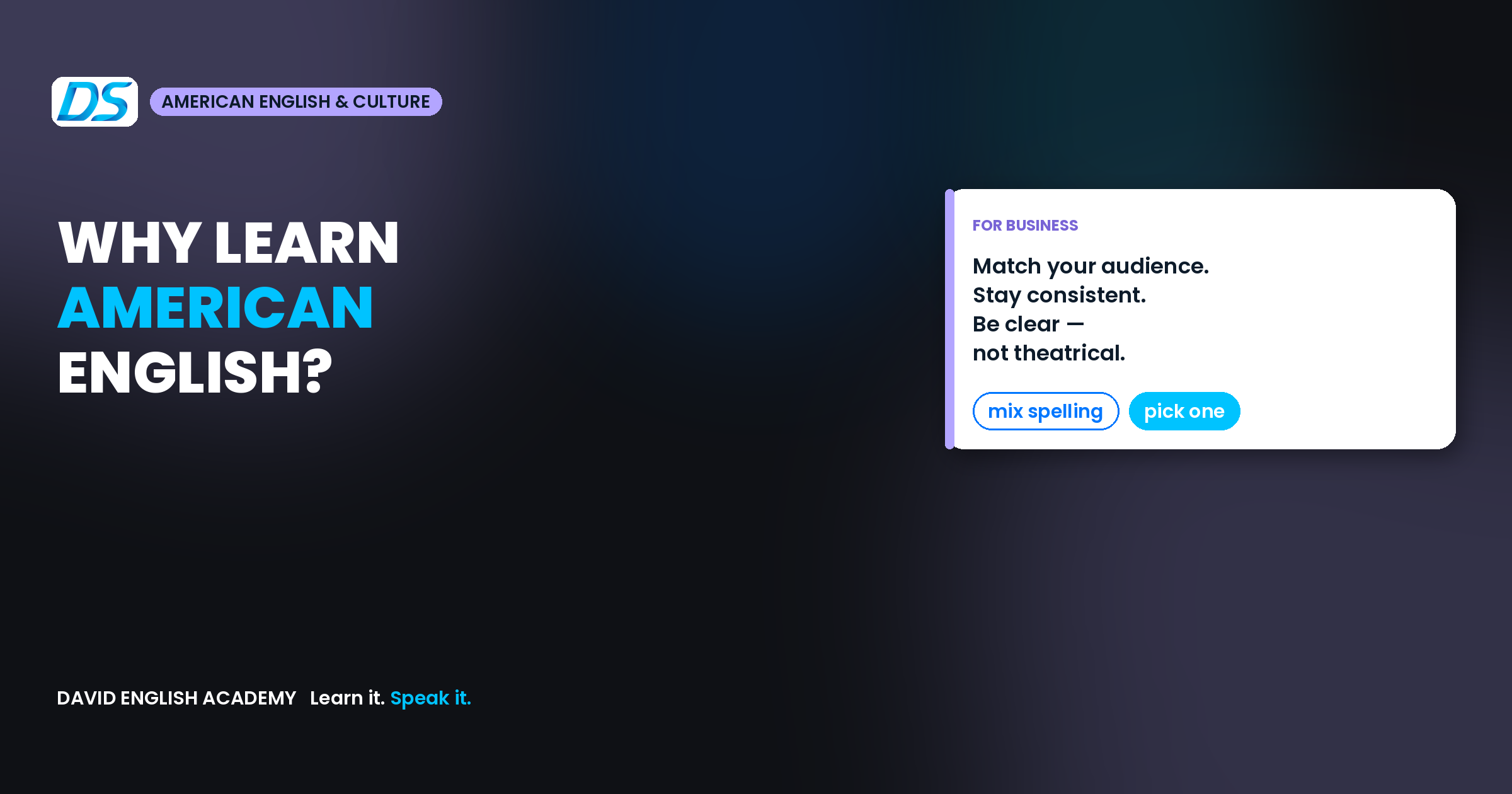
Neither is easier. Pick the variety that matches your audience and stay consistent.
Do I need American slang to work with Americans?
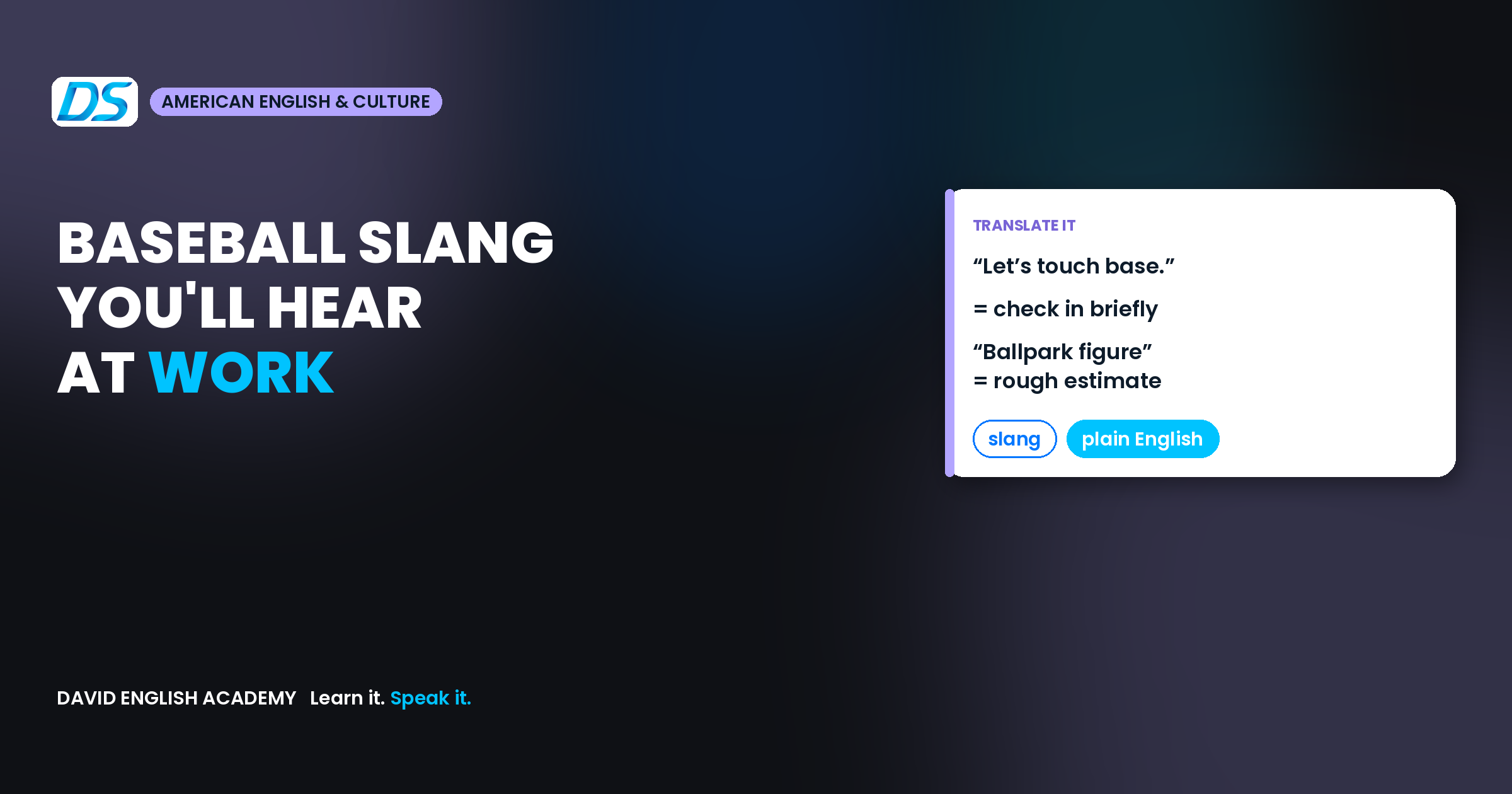
No. You need clear professional English. Understanding common slang and baseball metaphors helps; forcing them doesn't.
Can I mix American and British English?
In speech, people understand you. In writing for a US company, pick American spelling and stick to it.
Read next
I'm David Sugarman, founder of David English Academy. Born and raised in New York, I've been teaching English since 2011, and today I teach professionals online around the world. Learn it. Speak it. Read more about me, or visit the homepage to explore the courses.